Bed bug exterminator guide for Fairfield County, CT: heat, cost, renter law
Bed bugs in Fairfield County are treated with heat, registered pesticides or both, plus vacuuming, encasements and follow-up checks over several weeks. In apartments and other rentals, Connecticut’s CGS 47a-7a makes the landlord inspect within five business days and pay for inspection and treatment. Stamford, where 51.2% of homes are rented, shows why that matters.
What are bed bugs, and how can you be sure?
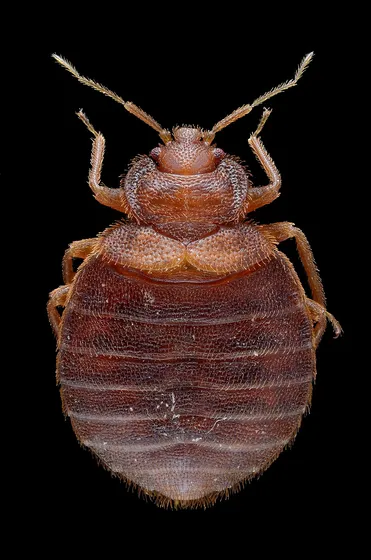
The common bed bug, Cimex lectularius, is the insect Connecticut’s bed bug law is written around. It feeds on blood, mostly at night, and hides close to where people sleep. According to EPA’s guide to finding bed bugs, bed bugs “will readily travel 5-20 feet” from their hiding places to feed. Feeding takes 3 to 12 minutes, and a female may lay 1 to 3 eggs a day and 200 to 500 in her lifetime.
The first step is identification, not treatment. Carpet beetles and other insects are easily mistaken for bed bugs. CAES’s guide to bed bugs found in beds or furniture says to have the insect identified by a health department staff member, an entomologist or a pest management professional. That makes sure it is not “a chimney swift bug or bat bug.” Those relatives need different control. EPA’s do-it-yourself control page also suggests you “Collect a sample of the pest to show an extension agent” or other insect expert.

Bites are not proof. EPA says “bites on the skin are a poor indicator of a bed bug infestation.” They can look like mosquito or chigger bites, rashes or hives, and some people do not react at all.
What are the signs of bed bugs, and where do they hide?
EPA lists four physical signs to look for when changing sheets or cleaning:
- Rusty or reddish stains on sheets or mattresses, from crushed bugs.
- Dark spots about the size of a printed period, which are excrement and can bleed into fabric like a marker.
- Eggs and eggshells, about 1 millimeter long and pale yellow, and the skins nymphs shed as they grow.
- Live bed bugs.
Around the bed, they hide in the piping, seams and tags of the mattress and box spring and in cracks of the bed frame and headboard. In a heavy infestation EPA says they spread to the seams of chairs and couches, curtain folds, drawer joints, electrical outlets, loose wallpaper and the joint between wall and ceiling. Its rule of thumb: “If a crack will hold a credit card, it could hide a bed bug.”
In apartment buildings, that reach matters. Bugs can move between neighboring units, which is why the Connecticut law below requires inspection of contiguous units as well as the one that reported them.
What bed bug bites look like
CDC’s overview of bed bugs says bites “look similar to mosquito or flea bites—a slightly swollen and red area that may itch and be irritating.” The marks “may be random or appear in a straight line,” often on the face, neck, arms or hands after sleeping. Most people do not notice them until one to several days after the bite. In some people the marks “may take as long as 14 days to develop,” and others never react. CDC says bed bugs “are not known to spread diseases to people.” Intense itching can lead to scratching and possibly a skin infection. If you think you are having an allergic reaction, CDC says to speak with your healthcare provider. Because bites look like so many other things, confirm with the physical signs above.
What else could be biting me?
Several things can leave bites or itchy marks that look the same. EPA’s guide to finding bed bugs says bed bug bites “can look like bites from other insects (such as mosquitoes or chiggers), rashes (such as eczema or fungal infections), or even hives.” CDC adds fleas to the look-alikes. The CAES spiders fact sheet warns that sores blamed on spiders have “a number of other causes including mosquito bites.” So the bite cannot tell you the cause. Look for the bugs themselves, shed skins, eggs or dark spots on mattress seams. A rash that spreads or will not heal is a reason to see a doctor. If you suspect a spider, the guide to Connecticut spiders and basement bugs covers the few that matter.
Bed bug myths: can bed bugs live in your hair?
Three beliefs about bed bugs come up again and again. Michael Potter’s bed bug guide for the University of Kentucky answers each one.
Can bed bugs live in your hair?
No. Potter writes that bed bugs “normally do not reside on or attach to people like lice or ticks.” Right after feeding, “they crawl to a secluded location to digest their meal.” That is why the places to check are mattress seams, bed frames and furniture, not your scalp. People do carry them, though, as hitchhikers on “luggage, clothing, beds, furniture, and belongings.” That is how bed bugs move from one home to the next.
Do bed bugs mean a dirty house?
No. Potter writes that “there is often no relationship between bed bugs and cleanliness,” because the bugs feed only on blood. “Pristine dwellings can be as vulnerable to infestation as are places of squalor.” Finding them is not a judgment on your housekeeping. It is a reason to confirm the identification and act, and, in a Connecticut rental, to notify the landlord promptly.
Can bed bugs jump or fly?
Neither. “Bed bugs don’t fly, or jump like fleas, but can crawl rapidly over floors, walls, ceilings and other surfaces,” Potter writes. They spread room to room and floor to floor through cracks and openings in walls, floors and ceilings. That is why Connecticut’s rental law, below, requires checking neighboring units too.
What a bed bug inspection involves
A good inspection starts with the bed and upholstered furniture and works outward. Connecticut’s law describes the same order. A landlord or qualified inspector “may initially conduct a visual and manual inspection of the tenant’s bedding and upholstered furniture.” They may look further when that is “necessary and reasonable” (CGS 47a-7a).
Under that statute a qualified inspector is one of three people: a certified applicator, a local health department official, or a “bed bug detection team.” That team is a scent detection dog and handler with a current third-party certification under the National Pest Management Association’s canine standards. Ask any inspector which of the three they are, and for the certification number.
Expect the inspector to check mattress seams, box spring, bed frame, headboard, nightstands, couches and baseboards. The inspector should say in writing which rooms and units were inspected and what was found.
Non-chemical steps that come first
EPA’s top ten tips start with “Don’t panic!” and advise against throwing everything out, because most belongings can be treated and dumping them can spread bugs to other homes. Its non-chemical steps, and those in the CAES bed guide, are the base of any plan:
- Hot laundry. CAES advises bagging bedding, carrying it to the dryer and running it on “high” for 20 minutes, or 30 if the dryer is very full.
- Vacuuming. Slowly vacuum mattress seams and tufts, bed frames, headboards and baseboards with a crevice tool, then seal and throw away the bag outdoors.
- Encasements. Zippered covers on the mattress and box spring trap bugs inside; EPA says to “leave the encasements on for a year.”
- Interceptors and distance. Move the bed about 6 inches from the wall, put interceptors under the legs and keep bedding off the floor.
- Clutter. Less clutter means fewer hiding places and an easier treatment.
- Repeat. CAES says to repeat the bed routine ten days later to catch bugs that hatched since.
EPA’s do-it-yourself page also warns what not to do. Rubbing alcohol, kerosene and gasoline “could harm you” and can ignite. Foggers “should not be your only method,” because “the spray will not reach the cracks and crevices where bed bugs hide.” Pool or food grade diatomaceous earth “should not be used.” CAES’s advice to residents is blunter: “Never self-treat using chemicals!”
Is heat treatment better than spraying for bed bugs?
This is the choice most people ask about, and EPA’s pages give the facts on both sides.
Heat
Bed bugs “die when their body temperatures reaches 45°C (113°F),” EPA says. “The room must be even hotter to ensure sustained heat reaches the bugs no matter where they are hiding.” Home methods have limits. EPA says “do-it-yourself heat treatments might not work,” while “professionals have access to more intensive and proven methods that can even treat whole houses with heat.” It warns against raising the temperature with a thermostat, a propane space heater or a fireplace: “this does not work and is dangerous.”
What heat does not offer is protection afterward: once the room cools, bugs carried back in from a neighboring unit or a bag can start again. Heat also needs preparation, since some belongings cannot take high temperatures.
Chemical treatment
According to EPA’s page on pesticides to control bed bugs, the agency has registered more than 300 products for bed bugs. They fall in seven chemical classes: pyrethrins, pyrethroids, desiccants, biochemicals, pyrroles, neonicotinoids and insect growth regulators. Resistance is the main problem: “Some bed bug populations have become resistant to pyrethrins and pyrethroids,” the most common sprays. EPA suggests switching classes or using products with different modes of action. Desiccants such as registered diatomaceous earth work physically, so bed bugs “cannot become resistant” to them. EPA limits their use to cracks and crevices, and its do-it-yourself control page says they “may take several months to work.”
Connecticut’s coming limit on neonicotinoids does not reach indoor bed bug work. The restriction that starts October 1, 2027 does not cover products not labeled for plants, “including … indoor or structural pest control” (Public Act 25-33).
Which to choose
Many plans combine the two: heat for a room or unit, then residual products or desiccants in cracks, plus encasements and interceptors to catch survivors. Ask the applicator to explain why the plan fits your home, how many visits it includes and how they will confirm the bugs are gone. EPA advises checking for bugs at least every seven days after treatment and to “keep checking for at least a year.” No pesticide is described as safe in this guide. Ask for the label and the reentry time instead, as EPA treats safety claims on pesticide labeling as false or misleading (40 CFR 156.10).
Who pays for bed bugs in a Connecticut rental?
CGS 47a-7a is Connecticut’s bed bug law for rentals. It covers any rental dwelling unit “other than a single-family unattached unit,” so apartments, condos, two-families and townhouses that are rented all count.
The tenant’s duties. The tenant “shall promptly notify a landlord orally or in writing” when they know or reasonably suspect bed bugs. With proper notice, the tenant “shall not unreasonably withhold access” for inspection or treatment, must follow reasonable preparation steps, and pays “all costs associated with preparing a dwelling unit.” Infested furniture or belongings may not be taken out of the unit until the pest control agent says treatment is complete or the landlord approves. A tenant whose “knowing and unreasonable failure to comply” causes repeat treatments can be held liable for them.
The landlord’s duties.
- Inspect within five business days of the notice, personally or through a qualified inspector, covering the unit “and any contiguous unit” the landlord owns.
- Report in writing within two days if the landlord inspects personally, saying whether bed bugs were found. The report tells the tenant they may contact the local health department, with its contact information.
- Treat within five business days of an inspection that finds bed bugs, using “reasonable measures, as determined by such qualified inspector.” A landlord may try treating first, but must vacuum, then get a qualified inspector’s check within five business days. If bugs remain, the landlord must hire a pest control agent within five business days.
- Pay: “the landlord shall be responsible for all costs associated with inspection for and treatment of a bed bug infestation.”
- Help tenants who cannot prepare because of physical limits, at a reasonable charge the landlord must disclose. Repayment runs over no more than six months unless both sides agree to extend it.
Before renting. “No landlord shall offer for rent a dwelling unit that the landlord knows or reasonably suspects is infested with bed bugs.” Before renting, the landlord must disclose whether the unit or any contiguous unit they own is currently infested. On request the landlord must give the last date the unit was inspected and found free of bed bugs. Prospective tenants can simply ask for that date.
Limits and remedies. The law does not require a landlord to provide other lodging or replace belongings. A landlord who does not comply is liable for reasonable attorneys’ fees and “the greater of two hundred fifty dollars or the tenant’s actual damages.” A tenant may contact “any agency at any time.” Landlords, in turn, can ask Superior Court for an order against a tenant who refuses access or treatment.
Who may treat bed bugs for hire
Anyone applying pesticides for hire in Connecticut needs a DEEP certificate. The business needs a DEEP registration number that it must show on written contracts, vehicles and newspaper, billboard and directory ads (Connecticut General Statutes, chapter 441). DEEP’s certification category descriptions put bed bugs in category 7A, General Pest Control, which covers “general household pests such as fleas, cockroaches, bedbugs, ants, etc. in residential and commercial locations.” Before the company agrees to apply a pesticide, chapter 441 requires it to hand over the product’s label details. They go to the person who asked for the work and to the resident or manager of the property: name, EPA registration number, active ingredients, signal word and reentry information.
How much does bed bug treatment cost?
Three national cost guides publish a bed bug range. They differ widely, so each is shown on its own row with its date, never averaged. None gives a Connecticut or Fairfield County price.
| What is priced | Figure | Source |
|---|---|---|
| Bed bug treatment | $1,000 to $4,000 | This Old House, national, as of March 2026 |
| Bed bug treatment | $300 to $5,000 | Bob Vila, national, as of September 2024 |
| Bed bug treatment, one bedroom (chemical) up to a whole four- to five-bedroom home (heat) | $300 to $3,500 | Fixr, national, as of January 2025 |
| Termites or bed bugs, a 2,000-square-foot home | “as much as $3,360” | Fixr, national, as of January 2025 |
| Canine inspection, or bed bug inspection on its own | This guide found no published figure |
Fixr’s high-end figure for heat-treating a home for bed bugs is “about $3,500, depending on your location” (national, as of January 2025). For other pests, see the guide to pest control costs in Connecticut.
Several things move a quote: the number of rooms or units, how far the bugs have spread, and heat versus chemical treatment. So do the number of follow-up visits included and whether contiguous units are inspected. In a rental covered by 47a-7a, the landlord pays these costs; the tenant pays for preparation.
How to choose a bed bug company
- Confirm the paperwork: a DEEP business registration number on the contract and a supervisor certified in category 7A.
- Ask for identification first. A company that quotes treatment before confirming the insect has skipped a step.
- Ask for an IPM plan. EPA advises choosing “a company with a good reputation” and asking it to use an IPM approach.
- Get the plan in writing: method, products, rooms and units covered, preparation steps, number of visits and how success will be checked.
- Ask about resistance: what they use if pyrethroids fail.
- Be wary of “safe” claims, which EPA treats as false or misleading.
This guide does not recommend or rank companies.
Bed bugs in five Fairfield County towns
Renting is common in the county’s cities, and that is where 47a-7a applies most. Figures are from the Census Bureau’s American Community Survey, 2020–2024, table B25003 (tenure) and table B25024 (units in structure).
- Stamford: 51.2% of occupied homes are rented, and only 33.8% of housing units are detached single-family houses, so most households live in buildings the bed bug law covers. The city’s Health and Human Services department is the local health department a tenant may contact. See pests in Stamford.
- Bridgeport has the highest renter share of Fairfield County’s 23 towns, 57.2%, and the fewest detached houses of the 10 towns this guide covers, 27.0%. Its Housing and Commercial Code Enforcement office handles rental-property violations. See pest control in Bridgeport.
- Danbury: 46.2% of homes are rented. The city’s Housing Program lets a tenant request an inspection of their unit if the landlord fails to respond. See pests in Danbury.
- Norwalk: 44.4% of homes are rented. See pest control in Norwalk.
- Shelton: 23.5% of occupied homes are rented and 12.2% of housing units are attached single-family homes, so rented townhouses and condos there fall under the law. The Naugatuck Valley Health District takes housing code complaints, and the city’s Fair Rent Commission hears complaints about rent increases made in retaliation for one. See bed bugs in Shelton rentals and condos.
Bed bugs are not the only shared-wall pest; see cockroach control and mouse and rodent control. Property managers should also read the commercial and multifamily pest control guide.
Sources
- EPA, How to Find Bed Bugs: https://www.epa.gov/bedbugs/how-find-bed-bugs
- CAES, Bed Bugs Found in Beds or Furniture, What to Do: https://portal.ct.gov/caes/-/media/caes/documents/bed_bugs/bed-bugs-found-in-beds-or-furniture-what-to-do.pdf
- Connecticut General Statutes, chapter 830 (section 47a-7a): https://www.cga.ct.gov/current/pub/chap_830.htm
- EPA, Top Ten Tips to Prevent or Control Bed Bugs: https://www.epa.gov/bedbugs/top-ten-tips-prevent-or-control-bed-bugs
- EPA, Do-it-yourself Bed Bug Control: https://www.epa.gov/bedbugs/do-it-yourself-bed-bug-control
- EPA, Pesticides to Control Bed Bugs: https://www.epa.gov/bedbugs/pesticides-control-bed-bugs
- Connecticut Public Act 25-33: https://www.cga.ct.gov/2025/ACT/PA/PDF/2025PA-00033-R00SB-00009-PA.PDF
- eCFR, 40 CFR 156.10: https://www.ecfr.gov/current/title-40/part-156/section-156.10
- Connecticut General Statutes, chapter 441: https://www.cga.ct.gov/current/pub/chap_441.htm
- CT DEEP, commercial applicator certification category descriptions: https://portal.ct.gov/-/media/deep/pesticides/certification/supervisor/catinfopdf.pdf
- This Old House, pest control cost (national, updated March 2026): https://www.thisoldhouse.com/pest-control/pest-control-cost
- Bob Vila, How Much Does Pest Control Cost? (national, updated September 5, 2024): https://www.bobvila.com/articles/pest-control-cost/
- Fixr, How Much Does It Cost To Hire An Exterminator? (national, updated January 31, 2025): https://www.fixr.com/costs/pest-control
- US Census Bureau, ACS 2020–2024 table B25003 (tenure): https://data.census.gov/api/access/data/table?id=ACSDT5Y2024.B25003&g=040XX00US09$0600000
- US Census Bureau, ACS 2020–2024 table B25024 (units in structure): https://data.census.gov/api/access/data/table?id=ACSDT5Y2024.B25024&g=040XX00US09$0600000
- City of Stamford, Health and Human Services: https://www.stamfordct.gov/government/public-safety-health-welfare/health-human-services
- City of Bridgeport, Housing and Commercial Code Enforcement: https://www.bridgeportct.gov/government/departments/housing-code
- City of Danbury, Housing Program: https://www.danbury-ct.gov/219/Housing-Program
- CDC, About Bed Bugs (April 26, 2024): https://www.cdc.gov/bed-bugs/about/index.html
- University of Kentucky Entomology, ENTFACT-636, Bed Bugs (Michael F. Potter, revised March 2026): https://entomology.ca.uky.edu/ef636
- CAES, Spiders Found in the House (Gale E. Ridge and Katherine Dugas): https://portal.ct.gov/-/media/caes/documents/publications/fact_sheets/entomology/spiders_in_the_house.pdf
- Naugatuck Valley Health District, Environmental Health: https://www.nvhd.org/environmental-health/
- City of Shelton, Fair Rent Commission: https://www.cityofshelton.org/p/fair-rent-commission-1
Frequently asked questions
How much does it cost for an exterminator to spray for bed bugs?
This Old House puts bed bug treatment at $1,000 to $4,000 (national, as of March 2026). Fixr gives $300 to $3,500 (national, as of January 2025), from chemically treating one bedroom up to heat-treating a whole house. In a Connecticut apartment or multifamily rental, CGS 47a-7a makes the landlord pay for inspection and treatment.
Will an exterminator get rid of bed bugs?
Usually, but not in one visit. EPA says treating bed bugs is complex and can take weeks to months, and advises checking at least every 7 days after treatment and for at least a year. Ask the company how many follow-up visits the price includes and what happens if bugs are found later.
Does my landlord have to pay for bed bug treatment in Connecticut?
Yes, in most rentals. Under CGS 47a-7a the landlord is "responsible for all costs associated with inspection for and treatment" of bed bugs in any rental unit other than a detached single-family house. The tenant pays the cost of preparing the unit, and can be held liable for repeat treatments caused by knowingly and unreasonably refusing to cooperate.
How fast does a landlord have to respond to bed bugs in CT?
Within five business days of the tenant's notice, the landlord must inspect, or have a qualified inspector inspect, the unit and any contiguous units the landlord owns. If bed bugs are found, treatment must start within five business days of the inspection. A landlord who inspects personally owes the tenant a written result within two days.
Is heat treatment better than spraying for bed bugs?
Neither is always better. EPA says bed bugs die when their bodies reach 113°F and that professionals can heat whole houses, while do-it-yourself heat may not work. Some bed bugs resist pyrethroid sprays, so a plan can combine heat, other pesticide classes, desiccant dusts in cracks, vacuuming and encasements.
Can I get rid of bed bugs myself?
Small, early infestations sometimes, with steady work: hot-dryer laundry, vacuuming seams, mattress encasements and interceptors under bed legs. EPA warns that treatment can take weeks to months and that foggers, rubbing alcohol and kerosene are poor or dangerous choices. CAES advises renters to tell the owner and not to self-treat with chemicals.
Can bed bugs live in your hair?
No. University of Kentucky entomologist Michael Potter writes that bed bugs normally do not live on or attach to people the way lice or ticks do. After feeding they crawl away to hide, usually in mattress seams, bed frames and furniture. They can ride on clothing and luggage, which is how they spread between homes.
Do bed bug bites mean I have bed bugs?
Not on their own. EPA calls bites "a poor indicator of a bed bug infestation" because they look like mosquito bites, rashes or hives, and some people do not react at all. Look for physical signs instead: rusty stains, dark spots of excrement, tiny pale eggs and shed skins, or live bugs in mattress seams.
Who do I call about bed bugs in a Stamford apartment?
Your landlord first, orally or in writing, as CGS 47a-7a requires. If the landlord inspects personally, the written result must tell you that you may contact the local health department and give its contact details. In Stamford that is the city's Health and Human Services department; the law lets you contact any agency at any time.