Pest control and exterminators in Bridgeport, CT
Bridgeport, CT has the oldest housing of Fairfield County’s 23 towns, with a median year built of 1955, and its highest renter share, 57.2%. So mice, rats, cockroaches and bed bugs are mostly building and landlord questions here. Few Bridgeport ticks reach CAES, but all three city mosquito traps found West Nile virus.
Found a tick or a nest right now?
- Tick bite: save the tick. Save it dry in a sealed bag; send it to CAES for free testing through your health department or by mail. See a doctor if a rash or fever follows. No city tick route found: mail the tick to the CAES lab in New Haven or drop it off there, free. details about tick drop-off in Bridgeport
- Nest by the door: keep back. Keep people and pets away from the nest; trouble breathing or hives all over need medical care right away.
- Droppings: air the room, then wet-clean. Air the room for 30 minutes, wear gloves and soak droppings with disinfectant or bleach before wiping; never sweep or vacuum them.
- Suspected bed bugs: report it. Renters tell the landlord, who has five business days to inspect; homeowners ask a DEEP-registered pest control company to inspect.
Hiring an exterminator in Bridgeport
- Check its DEEP registration.
- Get products, labels and notices in writing.
- Compare two written quotes.
- Demolishing a Bridgeport building? The Health Department's rodent-free inspection comes first, and its certificate is valid for only 30 days.
Pest control services in Bridgeport
In a Bridgeport rental, the landlord is the first call for rodents, cockroaches or bed bugs. Put it in writing and keep a copy with the date. If the landlord does not act, the city’s Housing and Commercial Code Enforcement office handles rental-property violations, and Environmental Health handles health inspections. Both are at 999 Broad Street; the numbers are under offices below. If you own a two- or three-family house and live in one unit, the same rules make you the landlord for the others, so a mouse or roach problem in one apartment is yours to coordinate across all of them.
If you are planning to tear a building down, book the city’s rodent-free inspection early; demolition cannot start without it. For a tick bite, save the tick even though Bridgeport has no city tick page: the Connecticut Agricultural Experiment Station (CAES) tests ticks sent by mail at no charge. For mosquitoes, the CAES traps at Central High School, Beardsley Zoo and Barnum Boulevard act as the city’s early warning; their results are in the tick and mosquito section below.
Pesticide work for hire must be done by a certified applicator for a business registered with DEEP, which prints its registration number on written contracts, vehicles and newspaper, billboard and directory ads under CGS 22a-66c. This site points to no contractor, and its about page says how it is put together. What each job involves in Bridgeport buildings:
- Mouse and rat control in Bridgeport homes and multifamilies: 32.3% of the city’s homes predate 1940, and decades of pipe and wiring work leave the gaps DEEP tells owners to seal.
- Cockroach control in Bridgeport apartments: with only 27.0% of housing units detached houses, one roach problem tends to span a building; the species notes come from CAES’s statewide fact sheet, not a city survey.
- Bed bugs in Bridgeport rentals: Bridgeport has the highest renter share of Fairfield County’s 23 towns, so the landlord-pays rule in CGS 47a-7a reaches about half of the city’s households.
- Carpenter ants in Bridgeport’s wood-frame houses: CAES says they excavate only wood already damaged by water, so in a city whose median home dates from 1955, a nest is a cue to look for an old leak; the carpenter ant vs termite guide separates the two.
- Termite control for Bridgeport homes and a termite inspection for a Bridgeport sale: 56.5% of homes were built before 1960, the age at which buyers most often ask.
- Commercial pest control for Bridgeport restaurants, stores and landlords: a building coming down needs the Health Department’s rodent-free certificate first, valid for 30 days.
- Wasp and hornet nests on Bridgeport porches and eaves: the city has no nest records; CAES’s statewide sheet warns that spraying single yellowjackets will not control the colony.
- Tick control for Bridgeport yards near parks and woods: only 14 Bridgeport ticks reached CAES in 2025, too few to read local risk from.
Nearby towns: Fairfield, with its $5 town tick test, borders the city to the west; Stamford is the county’s other renter-majority city; and Westport, the county’s top tick sender, is a short way down the shore. Inland, Trumbull, whose Health Department takes ticks in a locked drop box for $5 under its tick page, borders the city to the north, and just past it Shelton’s ticks go through the Naugatuck Valley Health District, which forwards each to CAES for $5.
Costs, choosing a company and rentals
Average treatment for a standard infestation (national): $171 (This Old House, March 2026).
Pest calendar
| Pest | Peak months | January | February | March | April | May | June | July | August | September | October (this month) | November | December |
|---|---|---|---|---|---|---|---|---|---|---|---|---|---|
| Blacklegged tick nymphs, 1 | May–Jul | none reported | none reported | none reported | none reported | peak | peak | peak | active | active | none reported | none reported | none reported |
| Blacklegged tick adults, 1 | Mar–Apr, Oct–Nov | active | active | peak | peak | active | none reported | none reported | none reported | none reported | peak | peak | active |
| Mosquitoes (West Nile virus risk), 2 | Jul–Sep | none reported | none reported | none reported | none reported | none reported | active | peak | peak | peak | active | none reported | none reported |
- Peak: the busiest months
- Active
- None reported
- October (this month)
Why pests in Bridgeport follow its old housing
How does Bridgeport’s old housing affect mice, rats and cockroaches?
Age gives rodents and roaches more ways in, and Bridgeport has the oldest homes of the county’s 23 towns. Its median year built is 1955; 32.3% of homes predate 1940 and 56.5% predate 1960, by the Census Bureau’s year-built counts. A building that has seen decades of plumbing, heating and wiring work tends to have more of the openings that DEEP tells owners to seal, around pipes, utility conduit, drains and vents. CT DEEP’s rodent page names the Norway rat and the house mouse as the most common rodent pests and says a rat can enter through a half-inch opening, must drink water daily and stays within 50 to 150 feet of its nest. CAES’s cockroach fact sheet says Oriental cockroaches live in cellars and crawl spaces, while American cockroaches are found more often in restaurants, bakeries and grocery stores than in private homes.
What does the bed bug law mean for Bridgeport’s renters?
Bridgeport’s bed bug rules reach a large share of households: 57.2% of the city’s occupied homes are rented, the highest renter share of Fairfield County’s 23 towns, by the Census Bureau’s tenure count, and only 27.0% of housing units are detached single-family houses, by its units-in-structure count. Under CGS 47a-7a, a tenant who is not physically able to prepare a unit for bed bug treatment can ask the landlord for reasonable help; the landlord may charge a reasonable amount, repaid over no more than six months unless both agree to longer. The law does not require the landlord to provide other lodging or to replace belongings. A landlord who ignores the statute is liable for the tenant’s reasonable attorneys’ fees and the greater of $250 or the tenant’s actual damages.
What is Bridgeport’s rodent-free inspection?
Bridgeport’s rodent-free inspection is the Health Department’s sign-off, required before any building is demolished, that the building is free of rodents. The city’s rodent-free inspection page says the certificate is valid for 30 days from the date it is issued. The fee is set on the city’s fee schedule and is paid by cashier’s check or money order. The inspection is handled by Environmental Health, the division that handles the city’s licenses and inspections. For an owner, the practical point is timing: a certificate that expires before the excavator arrives has to be redone, so schedule the inspection close to the demolition date. Call Environmental Health at 203-576-7474 to schedule it and to confirm the current fee before you set a demolition date.
Do Bridgeport’s older houses have termites and carpenter ants?
Bridgeport’s older houses can have both, since termites and carpenter ants follow wood and moisture whatever a house’s age. The CAES termite fact sheet says swarmers appear usually March to June, are often mistaken for flying ants, and do not swarm in summer or fall. The same fact sheet advises keeping wood at least 6 inches above the soil, using mulch sparingly and away from siding, sending downspout water away from the foundation, and keeping plants at least 3 feet from the walls. It notes that homeowner-applied termite treatments will not satisfy a home inspection when the house is later sold. Carpenter ants are a moisture signal: the CAES carpenter ant fact sheet says they hollow out water-damaged wood, and that scratching sounds in walls at night may point to a nest.
Who makes a Bridgeport landlord deal with rodents and roaches?
The state sets the duty and the city enforces it. Connecticut’s general landlord statute, CGS 47a-7, requires a landlord to follow the building and housing codes that affect health and safety, to keep the premises fit and habitable, to keep common areas clean, and to provide garbage receptacles and arrange removal. The statute does not name insects or rodents, but a tenant can point to them when rats gather at a trash area or roaches spread through a shared hallway. It also says a stricter local ordinance or code takes precedence. Bridgeport’s Housing and Commercial Code Enforcement office enforces the city housing code on rental property, so a tenant whose landlord has left rodents or roaches unfixed can report a code violation at 203-576-7072 or through Bridgeport 311. Bring the letter to the landlord, with dated photos, to the office on the first floor of 999 Broad Street.
Ticks and mosquitoes in Bridgeport: three West Nile traps
Only 14 blacklegged ticks from Bridgeport reached CAES in 2025. Eight were tested and 3 (38%) carried the Lyme bacterium, according to the 2025 summary; in 2024, 7 were identified and 2 of 5 tested (40%) were positive, per the 2024 summary. With so few ticks, one or two results swing the percentage, so it cannot be compared with the suburbs. Two of the 8 also carried Babesia and one Anaplasma. Human cases are counted by region: CDC’s Lyme dataset reports 184 cases in 2023 for the Greater Bridgeport planning region, which covers more than the city.
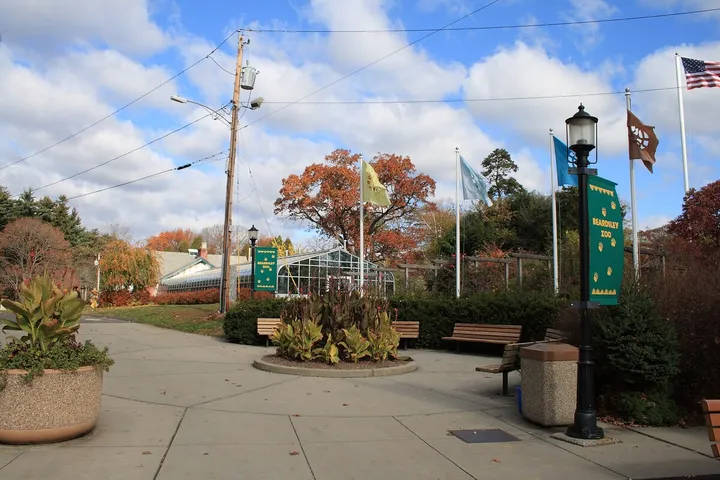
Mosquitoes are the bigger local signal. CAES traps at Central High School, Beardsley Zoo and Barnum Boulevard (trap list) produced 19 West Nile virus-positive samples in 2025, 10 of them at Central High School between June 11 and August 11, per the 2025 final summary. By October 13, 2026, Bridgeport’s three CAES traps had 11 West Nile virus-positive samples: Beardsley Zoo 5, Central High School 3 and Barnum Boulevard 3, per the 2026 summary. Each of those is a positive pool, not a mosquito count. Repellent and emptied buckets matter most from July through September, the high-risk window in the CAES mosquito brochure. Compare towns in the tick season guide or the CSV.

Exterminator prices and registration checks for Bridgeport
How much does an exterminator cost for mice or roaches in Bridgeport?
There is no published Bridgeport or Connecticut price, only national ranges. This Old House lists mice and other rodents at $180 to $600 and cockroaches at $100 to $600 (national data, as of March 2026), and Fixr puts rodents at $225 to $500 (national, as of January 2025). In a rental, the cost usually lands on the owner, who must keep common areas clean and the building fit and habitable under CGS 47a-7. The full cost guide explains what moves a quote.
What should a Bridgeport landlord check before hiring a pest company?
Bridgeport owners of two- and three-family houses hire for every unit, so check the firm once and keep the paperwork. Under CGS 22a-66c its DEEP registration number must be on its vehicles, its ads and the written contract; DEEP’s information look-up page offers a downloadable roster of active registered pesticide businesses to match it against. Ask for a written plan that names the entry points to seal before any bait goes down.
Offices to call in Bridgeport
- Health and Social Services: 999 Broad Street, Bridgeport, CT 06604; Monday to Friday, 8:00 am to 5:00 pm; 203-576-7680; healthdept@bridgeportct.gov. Its work includes disease surveillance and health inspections.
- Environmental Health: 999 Broad Street, 203-576-7474. Licenses and inspections, including the rodent-free inspection before demolition.
- Housing and Commercial Code Enforcement: 999 Broad Street, 1st floor, 203-576-7072 or Bridgeport 311. Rental-property code violations, apartment occupancy certificates, and blight.
- Tick testing: the state lab in New Haven tests Bridgeport residents’ ticks without charge, whether they arrive through a health department, by post or in person; its submission page has the form and address.
Sources
- City of Bridgeport, rights and responsibilities of landlords and tenants
- This Old House, pest control cost (national)
- Fixr, exterminator cost (national)
- CT DEEP, pesticide information look-up
- CGS chapter 441
- Census median year built
- Census year built (B25034)
- DEEP rodent management
- CAES cockroaches
- Census tenure (B25003)
- Census units (B25024)
- CGS chapter 830
- City of Bridgeport, rodent-free inspection
- City of Bridgeport, Environmental Health
- CAES termites
- CAES carpenter ants
- City of Bridgeport, Housing and Commercial Code Enforcement
- CAES ticks 2025, Bridgeport row
- CAES ticks 2024, Bridgeport row
- CDC Lyme data
- CAES trap list (Bridgeport)
- CAES mosquitoes 2025, Bridgeport traps
- CAES mosquitoes 2026, Bridgeport traps
- CAES mosquito brochure
- City of Bridgeport, Health and Social Services
- CAES tick submissions
- Town of Trumbull, Ticks
- Naugatuck Valley Health District, Environmental Health
Frequently asked questions
Are cockroaches common in Connecticut?
Yes. CAES names four species as regular home invaders in the Northeast: German, American, Oriental and brown-banded. Indoors they can develop year-round. In Bridgeport, where 56.5% of homes were built before 1960 and most housing units share walls, a cockroach problem in one apartment is often a building problem.
Who handles rats or cockroaches in a Bridgeport rental?
Start with the landlord, in writing: Connecticut law requires landlords to keep the premises fit and habitable and common areas clean. If the landlord does not act, report a code violation on the rental to Bridgeport's Housing and Commercial Code Enforcement office, 999 Broad Street, at 203-576-7072 or through Bridgeport 311.
Do I need a rodent inspection before demolishing a building in Bridgeport?
Yes. Before a building is demolished, the Bridgeport Health Department must complete a rodent-free inspection. The certificate is valid for 30 days from issue, and the fee is on the city's fee schedule, paid by cashier's check or money order. Environmental Health, at 203-576-7474, handles it.
How do I get a tick tested if I live in Bridgeport?
This guide found no Bridgeport tick-testing page, so ask the Health and Social Services department at 203-576-7680 whether it forwards ticks, or send the tick to CAES yourself. CAES tests blacklegged ticks that fed on a person at no charge; mail it dry in a padded envelope marked "Please hand sort".